
Episode 37: The Particular Parable of Palamedes Polymetis
Welcome to another episode of the Greek Myth Files! This episode was written by Hyde Morrison, a History major at the University of New Hampshire and general lover of all things myth. In fact, in addition to writing the script for the podcast Hyde has graciously provided artwork about Palamedes, who is not well represented in ancient art that has survived. I particularly like the way that Palamedes here is depicted with the “light of invention” since he is known for his innovative solutions to basic problems and it’s no wonder that Palamedes is shown as a Prometheus reborn—someone who uses his talents to benefit humankind.
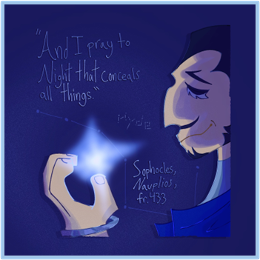
Image by Hyde Morrison, with quotation from Sophocles’ fragmentary play “Nauplios”
In this episode we discuss the basic concept of metis (long -e-), the Greek word for cunning intelligence and how Palamedes embodies it for the good of humanity (“the all-wise nightingale of the Muses who made no one suffer”), while his foil Odysseus uses it for devious and self-interested reasons. We will also consider the tense relationship between Palamedes and Odysseus and how the latter gains his revenge against former after they reach Troy.
One such invention of Palamedes is a board game similar to checkers, something that our ancient sources tell us Palamedes came up with so that the soldiers could have something mental to do while waiting for the next battle. We see a lot of vases with Greek heroes playing this game, including this famous version by the painter Exekias from around 530 BC, now housed in the Vatican Museums:
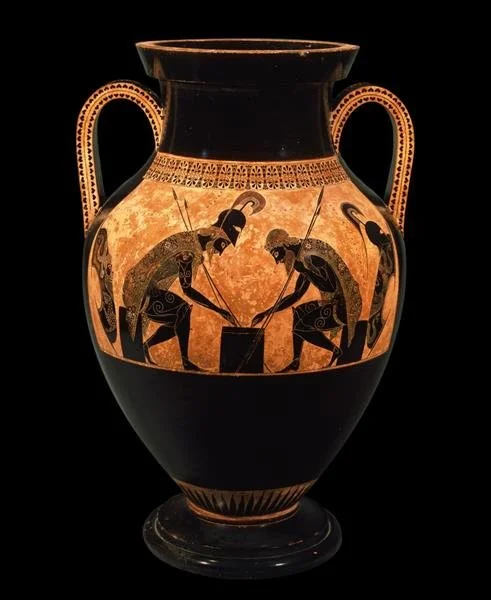
Achilles and Ajax son of Telamon play a board game in the interstices of the Trojan War.
Or this version of the same that is attributed to the Andocides painter (now at the Museum of Fine Arts, Boston). As it happens, Andocides used this scene to produce what is called a “bilingual” vase, with black figure on one side and red figure on the other. The latter—red figure—was a radical new way to produce images on vases that arose around 525 BC (and maybe an innovation to Andocides himself!), using the paint to outline figures rather than to paint the figures themselves. The natural color of the vase shows through for the figural parts of the vase.
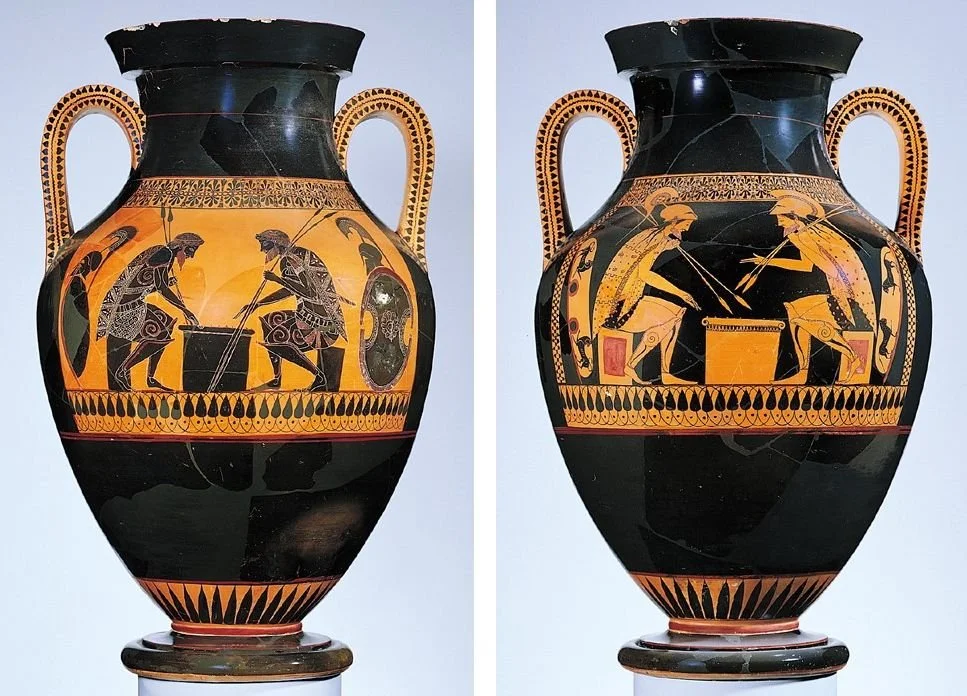
Black figure on the left, red figure on the right—on opposite sides of the same vase, attributed to the Andocides’ painter (ca. 525 BC). Now housed in the MFA, Boston.
As mentioned in the episode, there is no secure representation of Palamedes on an ancient object, vase or otherwise. However, the neoclassical sculptor Antonio Canova carved a fine statue of the hero, putting as an inscription to the statue “Palamedes, the Wisest of the Greeks.”
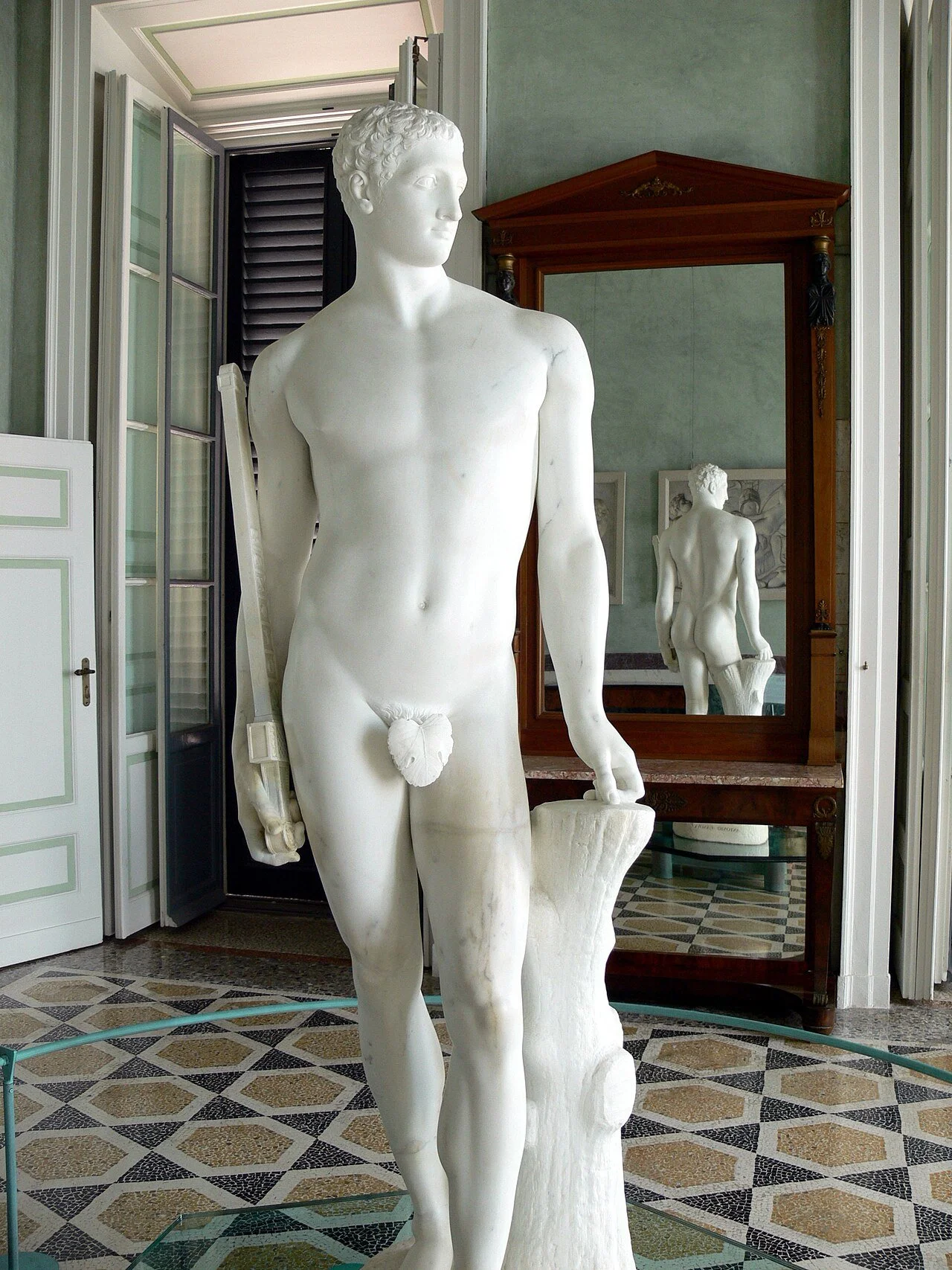
Credits:
Written by Hyde Morrison
Narrated by R. Scott Smith
Voice Acting and Sound Engineering: Jackson Scheele
Music by Jared Sims