
Episode 38: Young Achilles
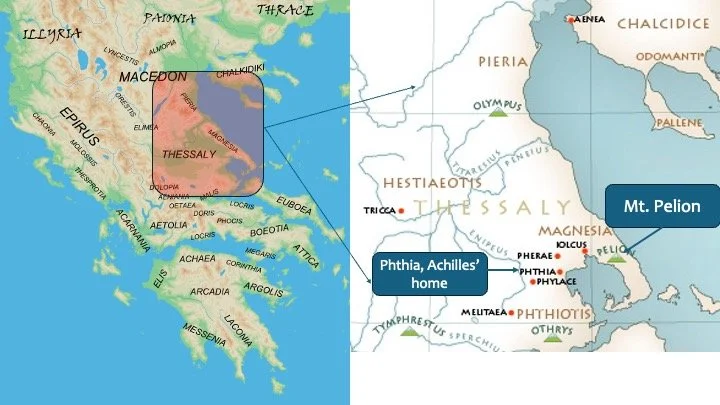
In this episode we treat the hero Achilles outside the Iliad: his parentage, his mother’s attempt to make him immortal (or hide him), and his youth under the guidance of Chiron. We thank Emma Swain for conceptualizing the episode and choosing the visual images found on this page. The first thing to focus on is where Achilles was from: Thessaly, an important area in the north on the mainland. Achilles is said to be from “Phthia” (not easy to stay!) and raised on Mt. Pelion by the centaur Achilles.

Peleus, encouraged by Zeus to pursue Thetis, holds onto the goddess, who turns into animals to try to scare off her attacker. Sea gods and goddesses tend to have the power of shapeshifting. In any case, Peleus successfully subdues Thetis, who relents and marries him. The image is on a kylix (drinking cup), made around 500 BC in Athens, now housed in the Berlin Antikesammlung. Image courtesy of ArchaiOptix under CC 4.0 license.
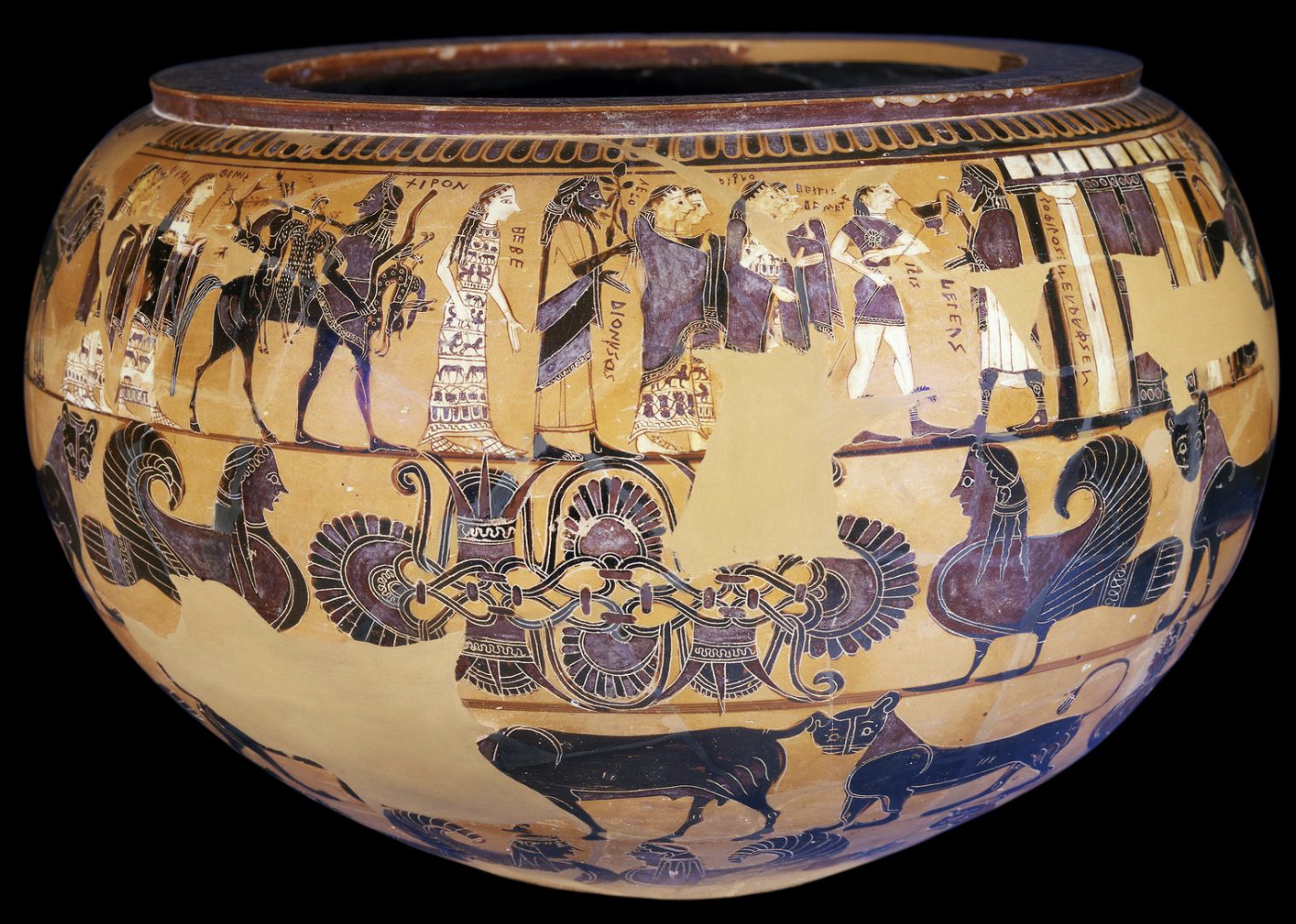
The justly famous Erskine Dinos (ca. 575 BC), painted by Sophilos and now housed in the British Museum. In the upper register we see the train of gods and goddesses being welcomed into Peleus’ home to celebrate his wedding to Thetis. (Detail in next image)
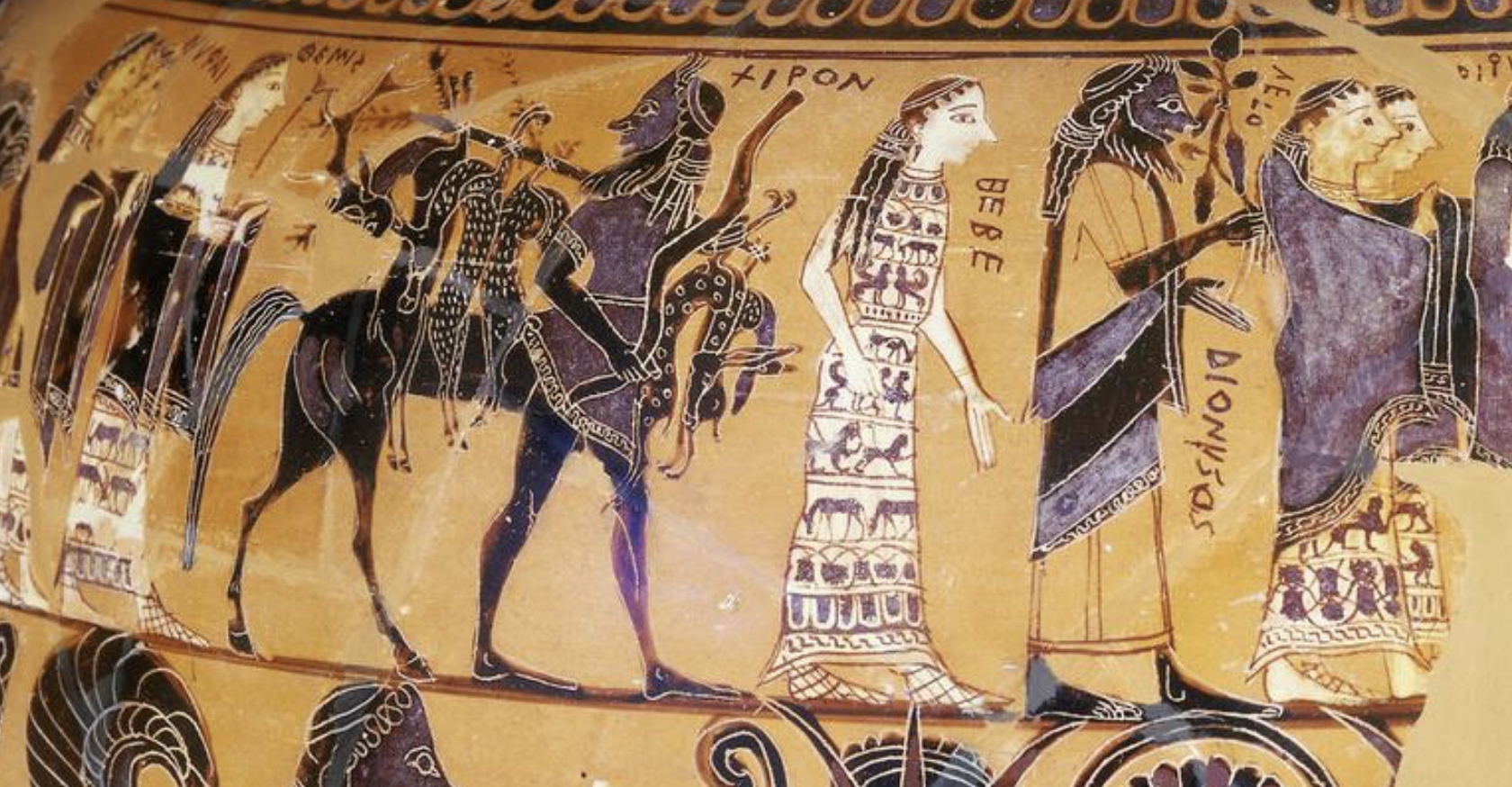
And image of the centaur Cheiron (ΧΙΡΟΝ), carrying with him the spoils of a hunt. He is preceded by Hebe (the goddess of youth) and the god Dionysos.
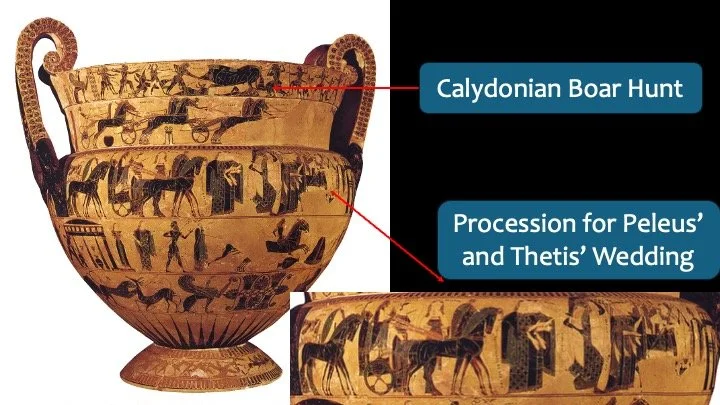
The Francois Crater, from around 550 BC, found in Vulci and now housed in the Florence Archaeological Museum. The central band shows the procession of gods and goddesses to the wedding of Peleus and Thetis. He’s hard to make out, but Cheiron is toward the front (right hand side), but you can see the game that he has on a pole just before the god Dionysos (who is holding the wine jar).
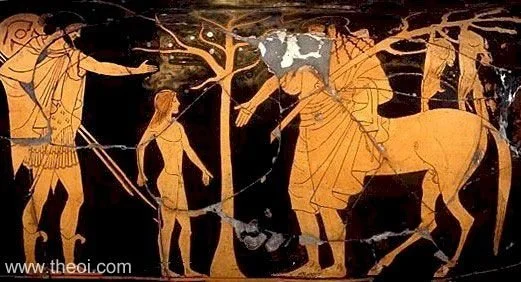
A (very buff) Achilles, perhaps 10?, being delivered to Cheiron by Peleus (ca. 490 BC, now housed in the Louvre. Image from theoi.com.
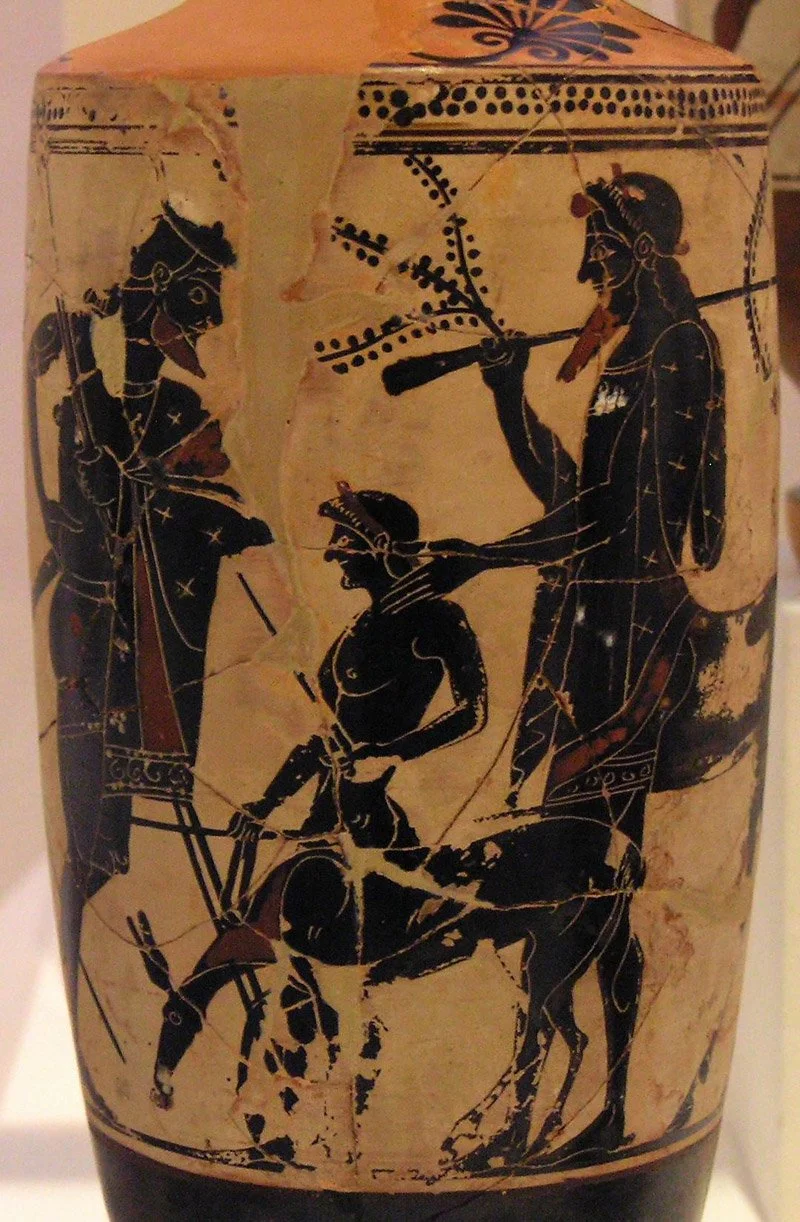
Another image of a chiseled Achilles with the Centaur Cheiron, unclear whether he is returning to Peleus or being handed off to Cheiron. From about 500 BC, now housed at the Athens Archaeological Museum.
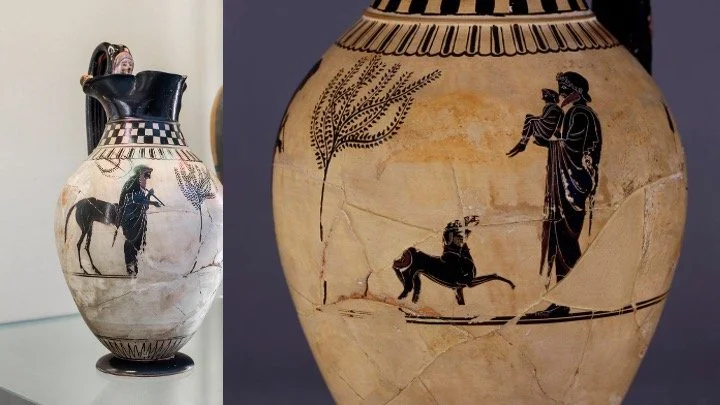
An Attic oinochoe (Wine-Jug) showing the handoff of a much younger Achilles to the centaur Cheiron. From 520 BC, now housed in the British Museum.

A magnificent wall painting from the so-called Basilica in the ancient city of Herculaneum, which was buried in 79 AD by the eruption of Vesuvius. Here, Cheiron teaches young Achilles how to play the lyre. Now housed in the Naples Archaeological Museum.
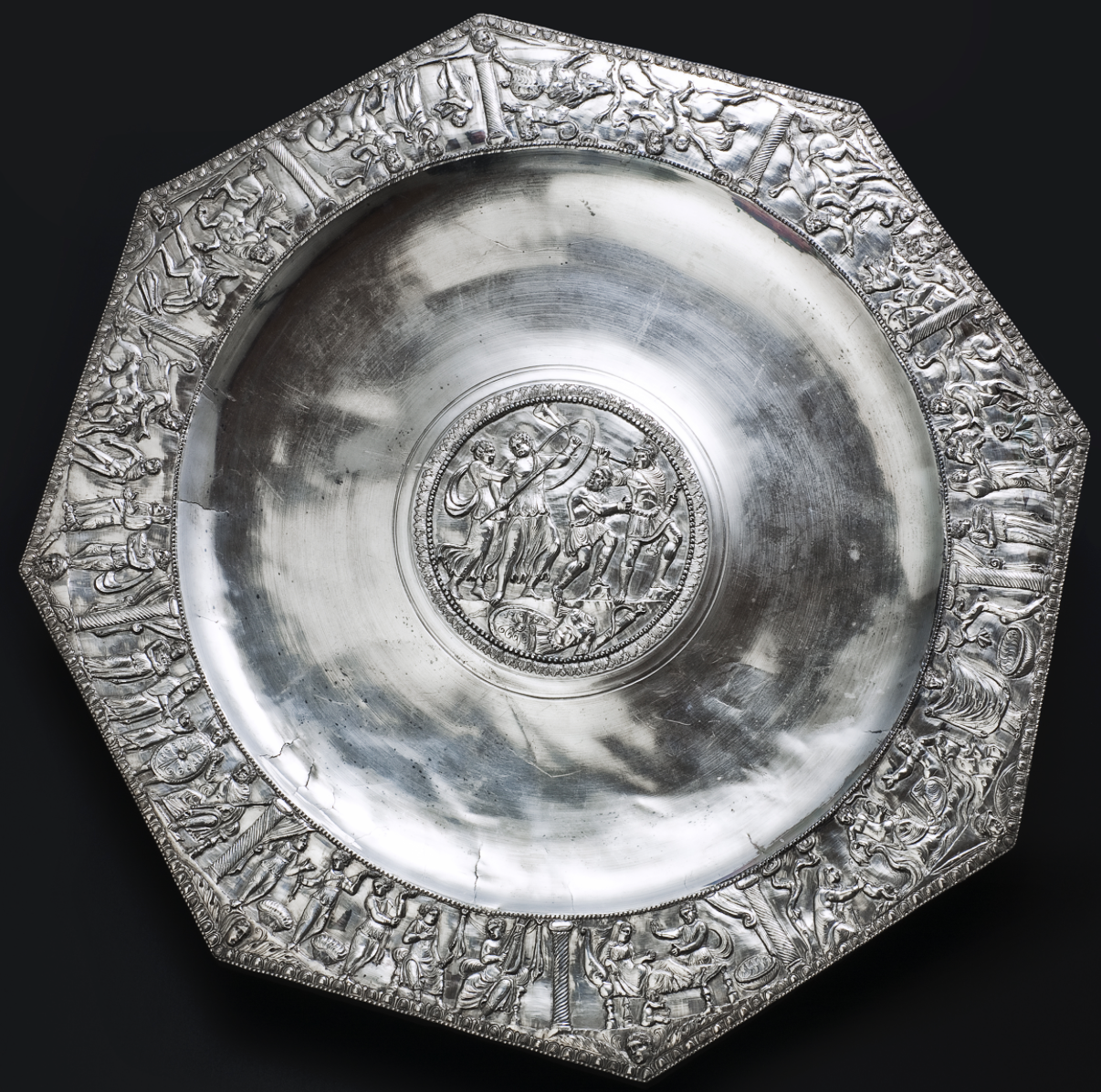
A silver plate from around 325–350 AD with the life of Achilles (11 scenes in total), with the central tondo showing Achilles’ being discovered hidden among the maidens in the court of King Lycomedes. See this website to interactively look at the different scenes.
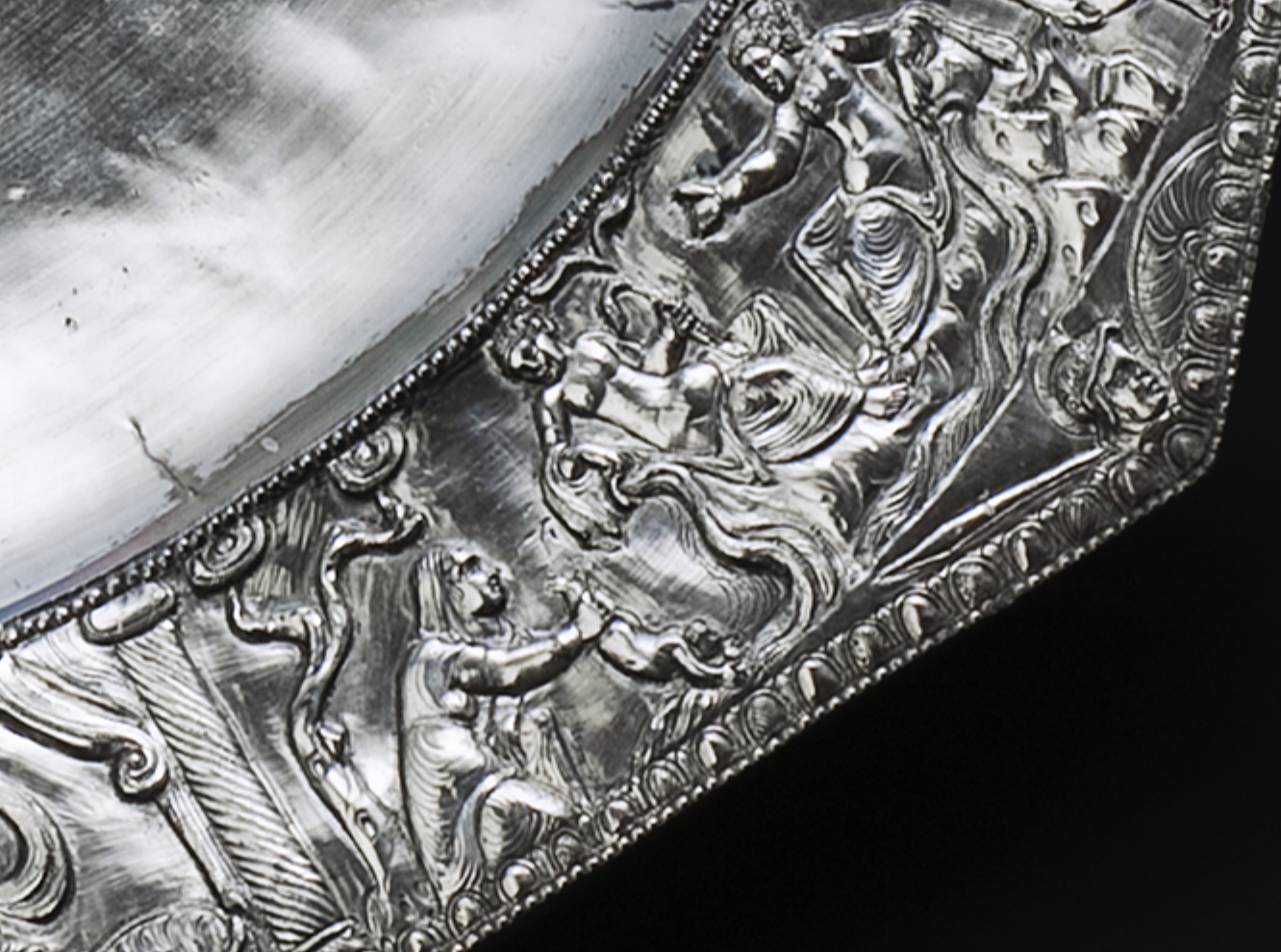
A close up of Thetis dipping Achilles in the Styx River—remember this is probably a later development in the myth and is not presupposed in the Iliad.
Credits:
Written by: Emma Swain and R. Scott Smith
Narrated by: R. Scott Smith
Voice Acting and Sound Engineering: Jackson Scheele
Music: Jared Sims, Brooklyn Tea