
Episode 41: The Myth of Meleagros and the Iliad
In this episode, we cover a famous myth that has particular importance in the Iliad. Its specific telling, which varies drastically from other versions, has a profound effect on how we view Achilles and his decision not to listen to his comrades and remain out of the war. In the main version, Meleagros (Latin and Anglicized: Meleager), assembles heroes from all over the Greek world to defeat the terrible Calydonian Boar. After the Greek heroes defeat the boar, who gets the hide? This creates a rift between Meleagros and his uncles, leading to the latters’ deaths. Ultimately, Meleagros’ mother, the sister of the slain men, kills Meleagros by burning the fateful log tied to Meleagros’ life. In the Iliad the rift leads to a very different story, which omits the famous fateful log, and it has particular meaning to the situation in the Iliad. The myth—mythos, “persuasive story”—is crafted to reflect the situation Achilles faces. A deep dive into the way the myth was presented in the Iliad reveals a sophisticated method of storytelling; Homer has crafted a myth surely known to his audience to mirror Achilles’ own situation. When Achilles does not follow the lesson of the myth, he seals his own fate and leads to his own doom, and that of his friend Patroclos.
The myth of Meleagros took place far away from Troy, in a sort of backwater area in Aitolia.
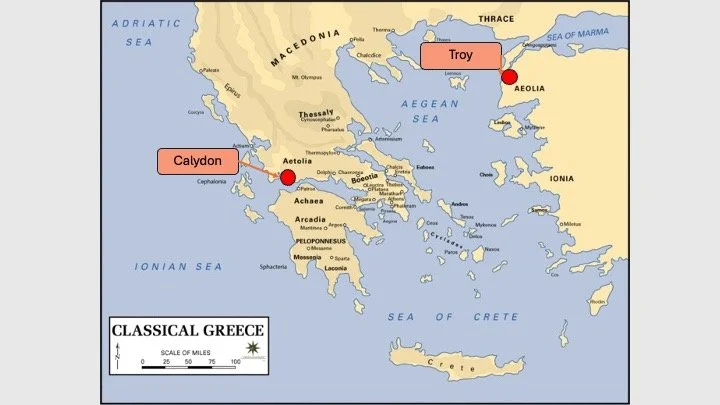
Map of Greece and Western Turkey
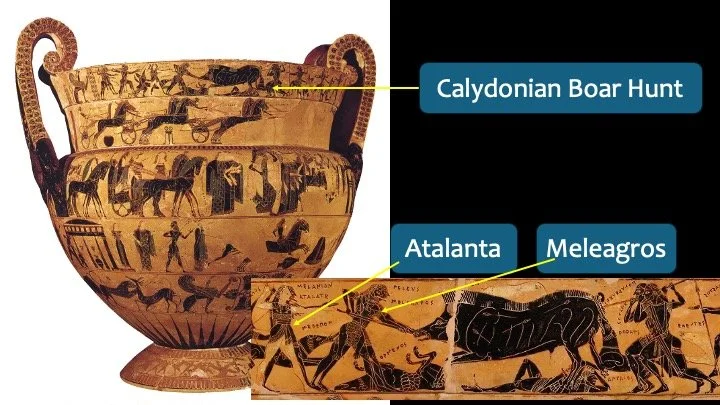
One of the most impressive images of the Calydonian Boar Hunt is from the Francois Crater (Florence Archaeological Museum, ca. 560 BC). It was typical of art from the archaic period to be depicted in bands, which we call registers. The top register shows the Calydonian Boar hunt, with Atalanta painted in white, as women were on ancient art.
The Melegros myth is part of the famous embassy of Ajax, Odysseus and (most important for this episode) Phoenix. Here is an ancient vase showing the three figures confronting Achilles. Phoenix, the elder who tells Achilles the story, is to the left. Odysseus is likely the one sitting directly to the left of Achilles, who is sitting on the right and looking grief stricken.
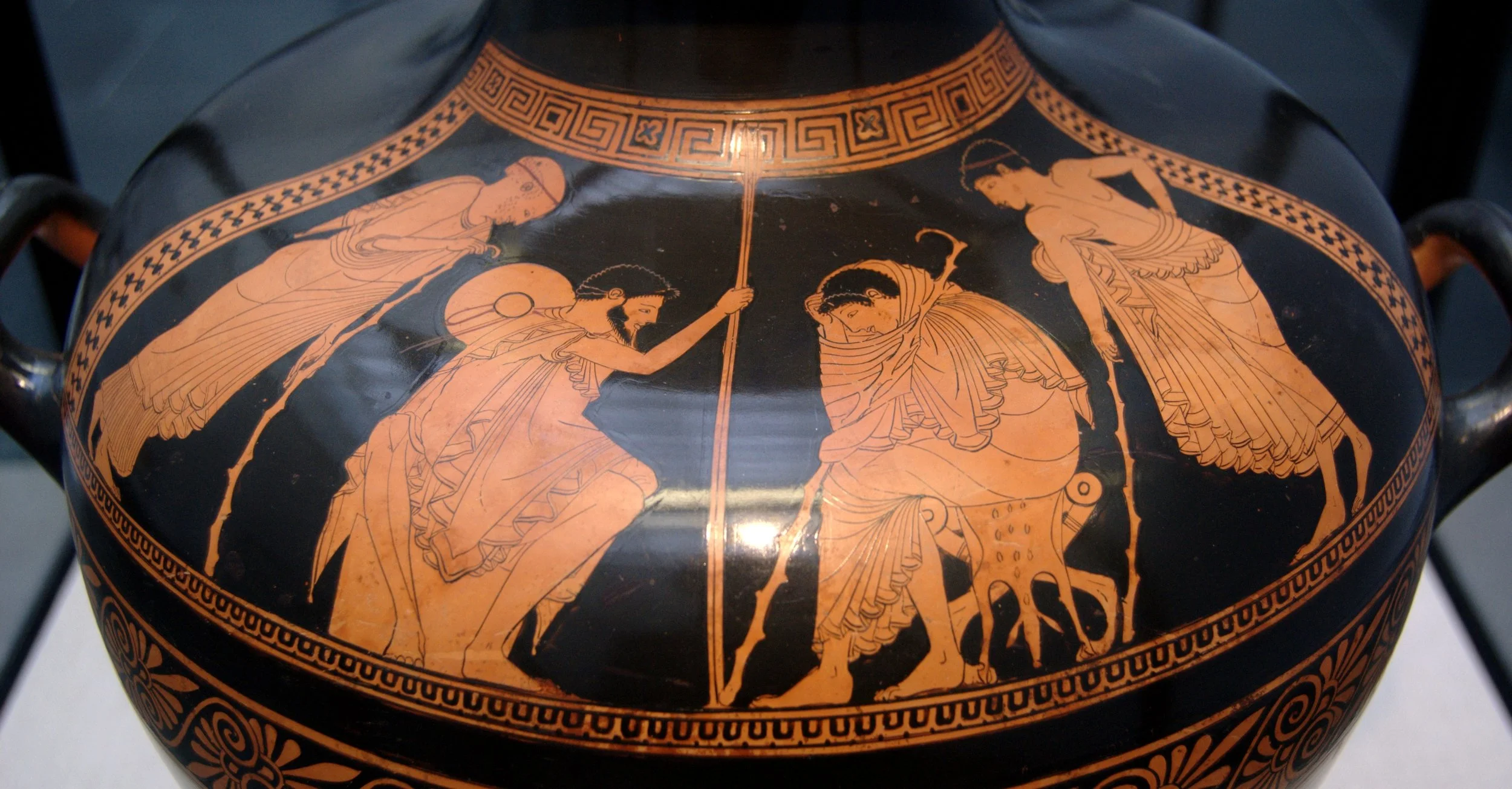
Red Figure vase from around 480 BC that depicts, from left to right, Phoenix, Odysseus, Achilles and Ajax son of Telamon. This scene comes straight from the 9th book of the Iliad where the three men were sent by Agememnon to coax Achilles back into the war against the Trojans. Red-figure composition is a later development (starting around 520 BC), and this vase is a nice comparison to the black figure pottery seen in the Francois Vase. It allows us to see how along with the narrative and oral tradition, the artistic interpretations and stylistic choices also changed and evolved.
The story of Meleagros in the Iliad has been well studied by the scholar Judith Rossman, who helpfully created this chart comparing the myth and Achilles’ situation. Here is that chart:
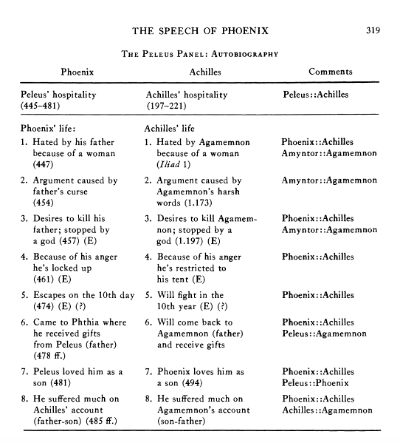
Judith A. Rossner, “The Speech of Phoenix: "Iliad" 9.434-605, Phoenix vol. 30 (1976) 314–27 (p. 319).
Credits
Written by Devin Agnello
Narrated by R. Scott Smith
Sound Engineer and Voice Actor: Jackson Scheele
Music: Jared Sims